Updated May 21, 2025 · 6 min read · By Capt. Mark Walton FRAeS
It's a Test of Who You Are in the Flight Deck
As an airline captain and aviation training leader, I’ve had the privilege of serving as Chief Pilot at two airlines and acting as a Check Airman since 2011. I’m type rated on the Airbus A350, A340, A330, and A320, and have spent years overseeing flight operations, assessing pilot performance, and designing recruitment and training programs. My focus has always been on safety, human factors, and mentoring - ensuring pilots are not just compliant, but competent and confident. In this edition of Captain’s Corner, we’re going to talk about what an airline is really looking for in a simulator check.
What Is a Simulator Check in the Airline Hiring Process?
When airlines recruit pilots, especially for First Officer or Direct Entry Captain positions, the simulator check is a core component of the assessment process. It’s designed to evaluate how well you can fly the aircraft, of course, but more importantly, how you think, make decisions under pressure, and work as part of a crew.
The simulator session is typically scheduled after the initial application screening and technical interview. Depending on the airline, it may be conducted on the aircraft type you’re rated on (e.g., A320) or a commonly used platform like a B737 or generic jet simulator.
Here’s why airlines use simulator checks in recruitment:
Most importantly, airlines aren’t looking for perfect handling. They want to see that you’re composed, adaptable, and able to recover from small errors with good judgment. A mistake - such as being high on approach isn’t necessarily a failure. Failing to recognize the error, communicate, and take corrective action is.
- Standardized Evaluation: Simulators create a level playing field with the same weather, same aircraft, same conditions - making it easier to compare candidates fairly.
- Skill Verification: Airlines need to confirm your flying ability matches what’s on your resume.
- Human Factors Assessment: How do you handle stress, workload, task prioritization, and communication in a high-pressure environment?
- CRM Observation: Your interaction with the sim partner (who may be another candidate or an assessor) offers insight into how you’ll operate in a real multi-crew setting.
What to Expect in a Recruitment Simulator Check (non-type rated candidates)
For non-type rated candidates, a typical recruitment simulator profile lasts around 30 to 40 minutes per person. Candidates are paired in twos, with each taking turns as Pilot Flying (PF) and Pilot Monitoring (PM). And let’s be clear - your performance as PM is just as important as when you’re flying. This role reveals how well you support your partner, communicate, and manage workload all core airline pilot competencies.
Before stepping into the sim, we provide a short briefing on the aircraft where key systems are, how to manage basic flows, and a quick overview of Airbus fly-by-wire controls. For many candidates, this is their first experience flying a jet, and we understand that. We’re not looking for textbook perfection we’re looking for adaptability, teamwork, and the right mindset.
The session typically includes:
Throughout the session, we’re watching more than just your stick and rudder skills. We’re observing:
This isn’t just a simulator exercise it’s a window into how you’ll function in a real airline cockpit, especially when things get busy or go wrong. Remember: It’s not about what you know it’s how you behave.
- A normal takeoff and traffic pattern (circuit) to a landing, hand flown in good weather, to assess your baseline aircraft handling.
- A second takeoff with an engine failure at V1 managed by the instructor. This is not about technical knowledge of engine failure procedures. It’s about how well you handle the aircraft and whether you show improvement from the first attempt.
- How you manage mental workload
- Signs of stress that impair communication or coordination
- How effectively the PM supports the PF, such as timely callouts, checklist management, and situational awareness
- Whether you operate as a crew not two individuals taking turns at the controls
What Are We Really Looking For in the Simulator?
You might think the goal of the simulator check is to show off perfect flying skills, but that’s not it.
What we’re really assessing is:
At this stage, no one expects you to fly like a seasoned airline pilot. What we want to see is potential: how you process feedback, adapt to a new environment, and handle unfamiliar challenges - especially under mild stress.
One of the most important areas we assess is your Crew Resource Management (CRM):
A candidate who makes early mistakes but shows measurable improvement, communicates effectively, and demonstrates good CRM will always stand out above someone who flies robotically but doesn’t engage or adapt.
Ultimately, we’re asking ourselves: "Will this person get through the airline’s training program?" If the answer is yes because you’re safe, composed, and coachable then you’ve passed the test.
- Are you trainable?
- Do you improve over the course of the session?
- Can you work effectively as part of a crew?
- Or will you likely struggle in the training program?
- Do you communicate clearly with your sim partner?
- Are you mentally present and supportive as Pilot Monitoring?
- Can you stay calm and keep working together, even when things go wrong?
What to Expect in a Recruitment Simulator Check (Type-Rated Candidates)
If you’re type-rated on the aircraft the expectations during your recruitment simulator check are significantly higher. At this level, we assume you can already fly the aircraft proficiently. The focus shifts away from basic handling and toward how you manage failure scenarios, demonstrate leadership, and apply sound decision-making under pressure.
You’re usually allowed to use your current or most recent airline’s Standard Operating Procedures (SOPs) so we expect to see a structured, familiar flow to how you brief, fly, and manage threats.
Here’s how a typical profile might look:
As the session progresses, we’re asking ourselves:
- V1 cut after takeoff \- testing not just your technical handling, but your ability to stabilize, communicate, and manage workload while maintaining situational awareness.
- LOFT-style scenario (Line-Oriented Flight Training) a short line simulation where you deal with operational pressures: weather, reroutes, MEL items, or minor system abnormalities. This is where we assess your non-technical skills like decision-making, workload management, and CRM in a dynamic, evolving context.
- Do you handle failures with structure and clarity?
- Do you use your PM effectively and maintain crew coordination?
- Are you prioritizing, communicating, and showing sound judgment?
- If things deviate from plan, do you remain calm and adaptable?
What Are We Really Looking For?
At this level, it’s not about “can you fly the airplane?” We know you can. What we’re really gauging is:
Candidates who maintain structure, communicate effectively, and use their sim partner as a true crewmember, not just a silent passenger - stand out.
So if you're heading into a recruitment sim check as a type-rated applicant, remember:
Technical flying is expected. It’s your judgment, coordination, and failure management that gets you hired.
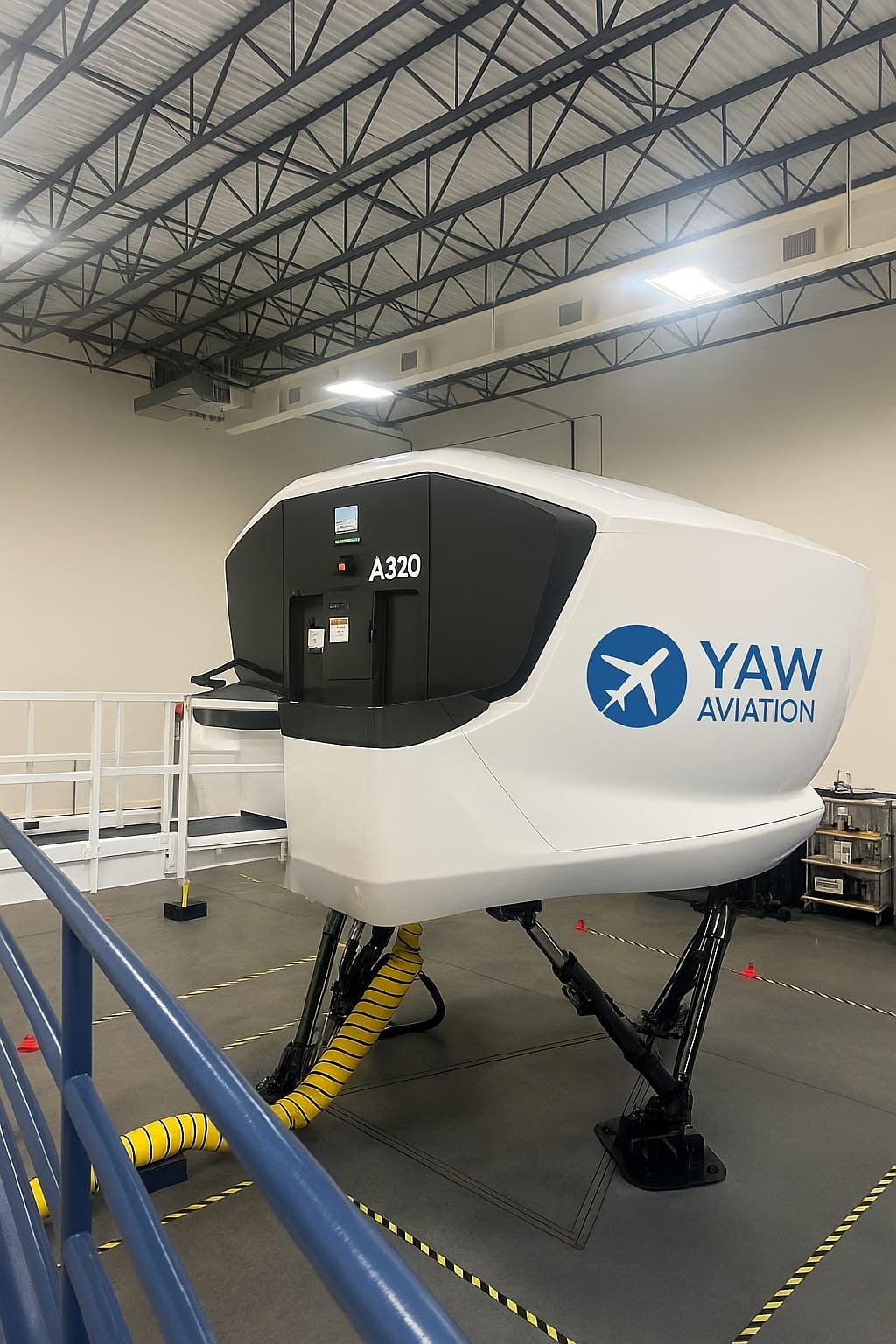
Airbus level D full flight simulator
When Lessons Fade: The Tragedy of D-AXLA and the Importance of Respecting Maintenance Check Flights
The Overlooked Threat: Non-Liquid Runway Contamination and the Gap in Certification Standards
Airbus A320 PFD and ND
- How you manage failure scenarios
- How well you apply threat and error management
- Whether you think ahead and remain composed in real-world line situations
- And ultimately - will you make it through our training and line check without difficulty?
Work on this one-to-one
Briefing, A320 full motion simulator session, assessment preparation and structured debrief so you fly your airline simulator assessment to the standard assessors expect.